
Key Facts
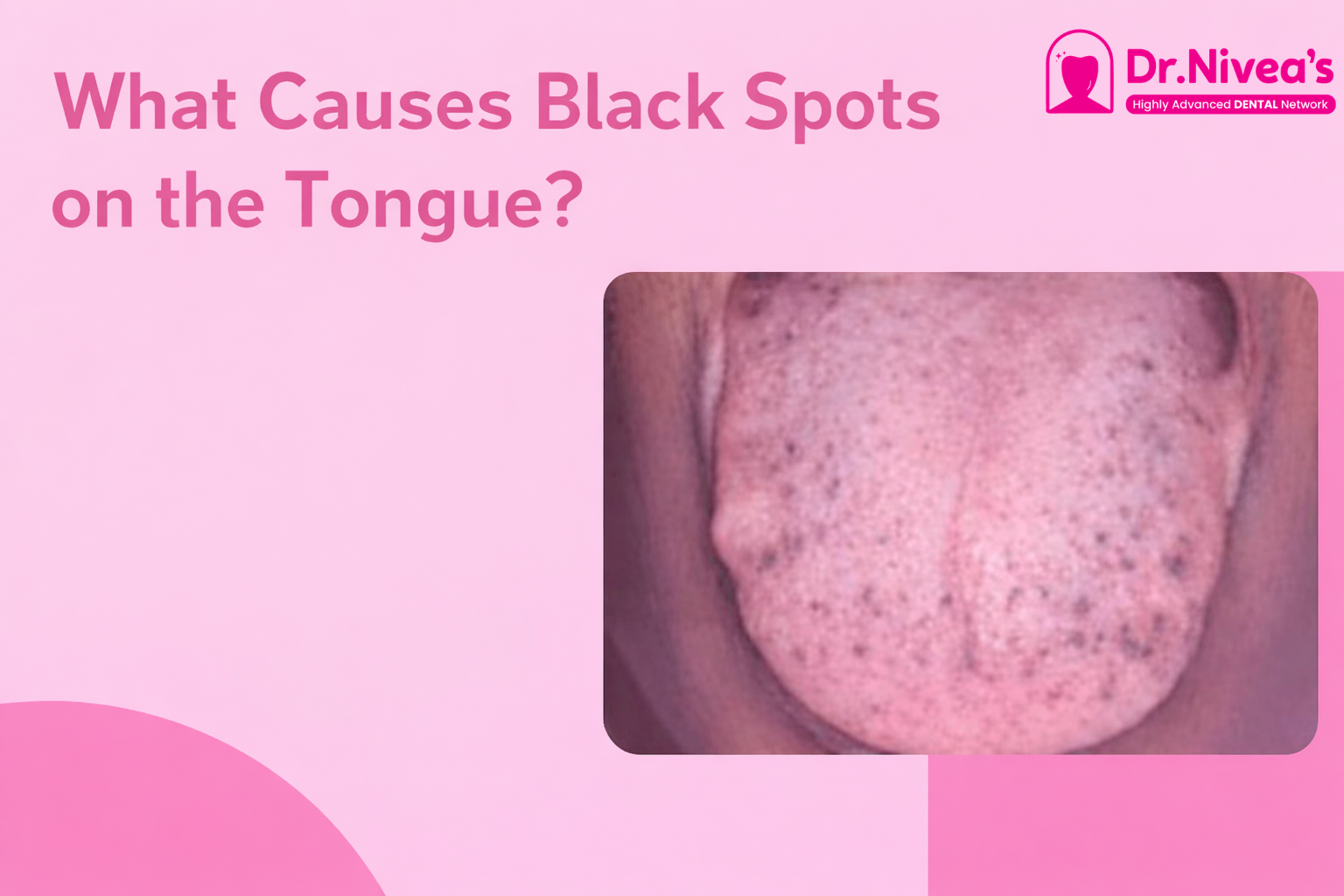
Sometimes, black spots on the tongue can appear suddenly and disappear within hours. This is often due to temporary staining of the taste buds from foods like coffee, black tea, red wine, or berries. These spots can range from tiny dots to larger dark patches and are usually harmless.
However, ignoring persistent black spots may lead to overlooking a more serious issue. This guide will help you understand the causes, natural remedies, and when it’s important to seek professional care.
Book an appointment: Dr. Nivea’s Highly Advanced Dental Network
What Do Black Spots on the Tongue Mean?
Black spots on the tongue refer to discolouration that can vary from small dots to noticeable dark patches. In most cases, they are temporary and harmless.
However, if the spots last more than a couple of days, they may indicate an underlying health condition that needs attention.
Some people are born with dark spots on their tongue, known as a pigmented nevus. These are harmless and more common in individuals with darker skin tones.
Causes of Black Spots on the Tongue
1. Food and Drink Stains
The most common cause is staining from foods and beverages. The tongue’s surface contains taste buds that can absorb pigments from items like blueberries, coffee, and wine. These stains are harmless and usually disappear with good oral hygiene.
2. Hyperpigmentation
Hyperpigmentation occurs when excess pigment develops in the tongue tissue. It may be linked to certain medications or treatments like chemotherapy. Drugs such as fluorouracil, vinorelbine, and daunorubicin can also cause this condition.
3. Tongue Injuries and Piercings
Biting the tongue, cuts, cracked teeth, or oral piercings can lead to black spots. These are often signs of minor bleeding or tissue damage and may cause discomfort.
4. Chemical Exposure
Certain chemicals, such as bismuth found in some medications, can react with the tongue and cause discoloration. This change is usually temporary and resolves on its own.
5. Tongue Cancer
Black spots may be a warning sign if they are accompanied by symptoms like lumps, swelling, or sores that don’t heal. In such cases, immediate medical evaluation is essential.
6. Black Hairy Tongue
This condition occurs when dead cells do not shed properly, leading to a dark, hairy appearance on the tongue. Poor oral hygiene, smoking, and tobacco use are common causes.
7. Peutz-Jeghers Syndrome (PJS)
A rare genetic disorder that can cause dark spots on the lips, mouth, and tongue. These spots may resemble black patches.
How Are Black Spots on the Tongue Treated?
In many cases, improving oral hygiene—such as brushing your tongue and rinsing regularly—can resolve the issue.
If the spots persist for more than 2–3 days, it’s important to consult a dentist or doctor. Diagnosis usually involves a physical examination and, if needed, lab tests to check for infections.
Being open about habits like smoking or tobacco use can help healthcare providers identify the root cause and recommend the right treatment.
Takeaway
Most black spots on the tongue are harmless and fade with proper oral care. However, if they persist or are accompanied by other symptoms, they could indicate a more serious condition. dental clinic in Trichy In such cases, seeking professional advice is crucial for accurate diagnosis and treatment.
FAQs
How to remove black spots on the tongue naturally?
Maintain good oral hygiene by brushing your tongue daily. Rinse with warm salt water and avoid tobacco and staining foods like coffee.
What do black spots on the tongue mean?
They are usually harmless stains, but can sometimes indicate underlying health conditions if persistent.
Why do I have black spots on my tongue?
Common reasons include food stains, injuries, pigmentation, or poor oral hygiene.
In Tamil culture, there’s a myth about black spots on the tongue—what’s the truth?
It’s just a myth. Black spots are medically linked to physical causes, not beliefs or sayings.
What diseases can cause black spots on the tongue?
Conditions include hyperpigmentation, black hairy tongue, and, in rare cases, tongue cancer.


.png)