Key Facts
Can Babies Be Born With Teeth?
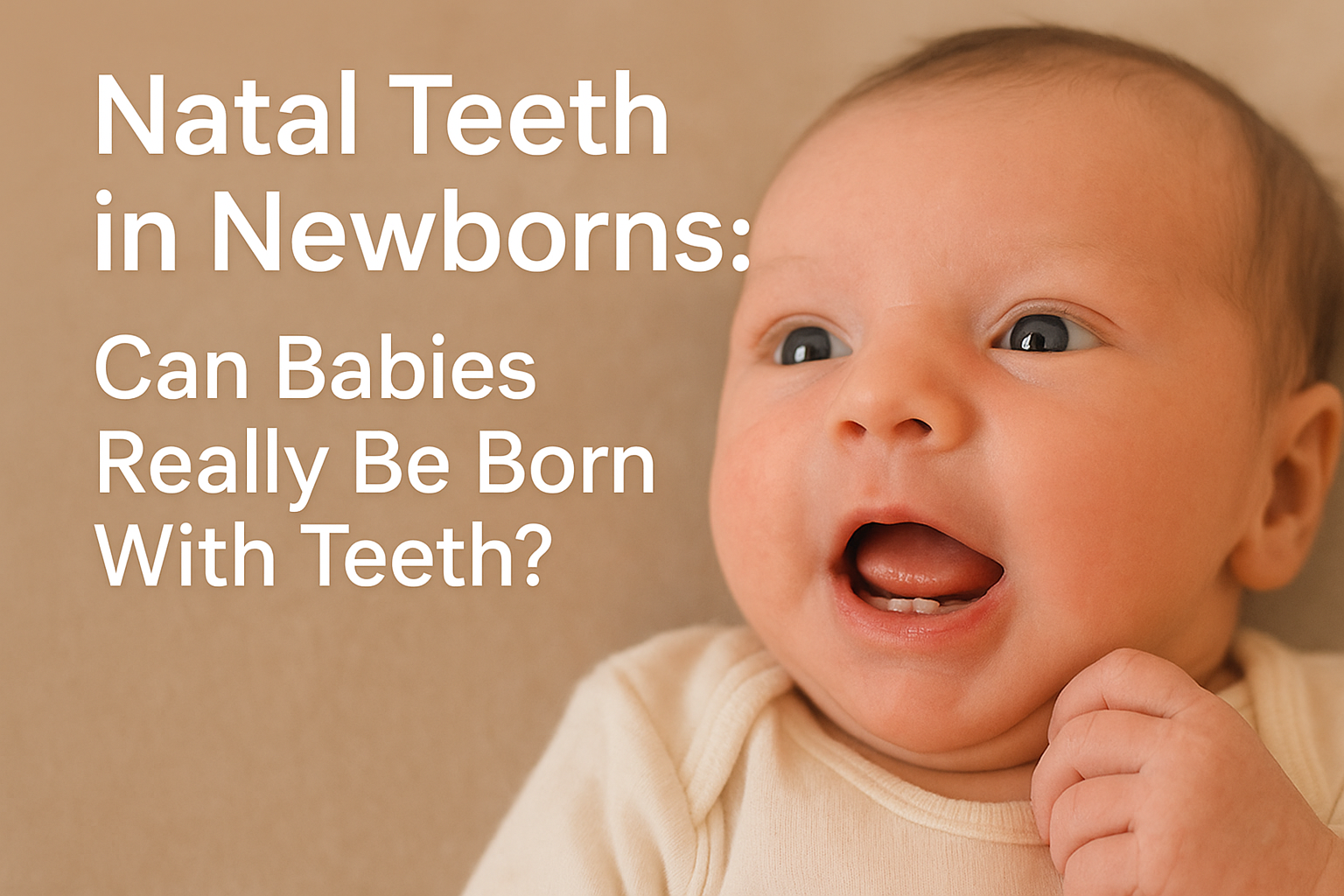
Although teeth usually begin forming months after birth, some babies are born with teeth known as natal teeth. These teeth are typically not harmful and often don’t require treatment, but they should be examined by your baby’s paediatrician.
Babies aren’t born with a full set of teeth—usually only one or two natal teeth appear. There are no documented cases of newborns having a full mouth of teeth. While not a serious condition, natal teeth do require careful monitoring, which this article explains in detail.
What Are Natal Teeth?
Natal teeth are teeth present at birth. They tend to have weak, underdeveloped roots, making them more likely to fall out early. The exact cause is unknown, but some studies suggest a possible link to certain medical conditions.
A 2023 study reported that about 1 in 289 newborns has natal teeth, while 1 in 2,212 has neonatal teeth (erupting within the first month).
Characteristics of Natal Teeth
These teeth may be part of the baby’s natural primary set or may be extra (supernumerary) teeth.
Difference Between Natal Teeth and Neonatal Teeth
|
Feature |
Natal Teeth |
Neonatal Teeth |
|
Time of Appearance |
Present at birth |
Erupt within the first month of life |
|
Occurrence Rate |
1 in 289 babies |
Even rarer than natal teeth, i.e. (1 in 2,212 babies) |
|
Structure |
Often weak roots and loose |
Slightly stronger than natal teeth |
Should Natal Teeth Be Removed?
Most natal teeth do not require removal. Extraction is considered only when:
A paediatric dentist will determine whether extraction is necessary.
Complications Associated With Natal Teeth
Although not dangerous, natal teeth may lead to:
How to Care for Babies With Natal Teeth
1. Regular Checkups
Visit a paediatric dentist soon after birth to evaluate the teeth and plan appropriate care.
2. Gentle Oral Hygiene
Use a soft, clean cloth to wipe the gums and teeth after feeding. Avoid hard toothbrushes.
3. Monitor for Looseness
Check regularly for mobility. If the tooth becomes very loose, consult your doctor to avoid choking risks.
4. Breastfeeding Adjustments
Try different feeding positions or use a silicone nipple shield if the teeth cause discomfort.
5. Watch for Infection
Look for redness, swelling, or pus around the gums. Seek medical care if these symptoms appear.
6. Manage Sharp Edges
Dentists can smooth sharp edges or cover them with dental material to prevent ulcers.
Takeaway
Natal teeth are rare but usually harmless. With proper care, monitoring, and guidance from a paediatric dentist, most babies with natal teeth experience no major issues. If your child has natal teeth, early evaluation can help prevent complications such as feeding difficulties, infections, or accidental swallowing.
For expert advice and support, consult paediatric dentists at Nivea's Dental Care to ensure the best care for your baby’s oral health.

.png)
.png)